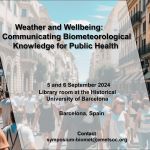
The Symposium with the focus on Communicating Biometeorological Knowledge for Public Health will be held as a hybrid side event at the EMS Annual Meeting in Barcelona on 5 and 6 September 2024. In-person attendance is limited to 50 participants.[more]
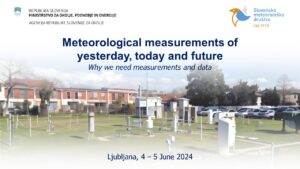
Several events are planned to mark this significant milestone. One of the most important ones is the symposium “Meteorological measurements of yesterday, today and future”, co-organized with the Slovenian Environment Agency.[more]
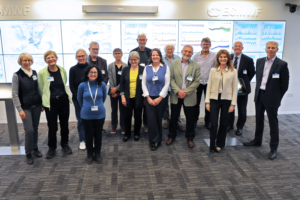
The EMS Council was invited to hold its 52nd Session in Reading, the first day at ECMWF, and the second day at the headquarters of the Royal Meteorological Society. This was the first session under the leadership of EMS President Liz Bentley.[more]
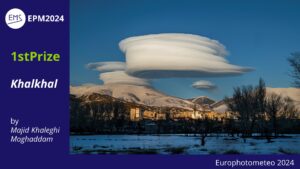
Majid Khaleghi Moghaddam with “Khalkhal”: This cloud form is altocumulus type 4 and indicates strong wind blowing in the upper levels of the atmosphere. Find out about the run-ups and the public favourite[more]
The call for nominations for the EMS Young Scientist Award 2024 is open until 21 April 2024. This award is given to an individual in recognition of excellent performance in terms of scientific publications or[more]
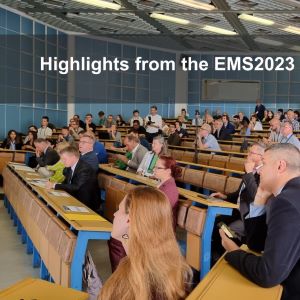
The Media and Communication Committee has created a short video with a short recap of EMS 2023, which took place 3-8 September 2023 in Bratislava. Included are a few interviews with conference participants, that were[more]